ABOUT THE
T CHALLENGE
The T Challenge is our stage to recognize pioneering solutions and award outstanding innovators with a broad network full of opportunities. This year, our focus is on shaping a world of connected intelligence – moving beyond connectivity to connect intelligence across networks, products, services and customer experiences. We invite researchers, startups, and tech pioneers to share their visions for value creation and enhanced customer experiences based on intent-driven, adaptive and autonomous networks.
Call for action
your network of
opportunities
That’s why T-Mobile US and Deutsche Telekom want to make sure great ideas are seen and heard. We set the stage for the greatest talent, brightest minds, and most creative visions, and transform them into real game-changers – by working on them, re-thinking them, and further developing them with a network of experts in the middle of the spotlight.
The T Challenge is our stage to give innovators access to what we can uniquely offer: an infinite network of opportunities to turn ideas into impact.
Set your stage for
GLOBAL RECOGNITION.
Amplify your
POSITIVE IMPACT.
Grow your vision with
LONG-TERM BUSINESS OPPORTUNITIES.
Celebrate your
PASSION FOR TECH.
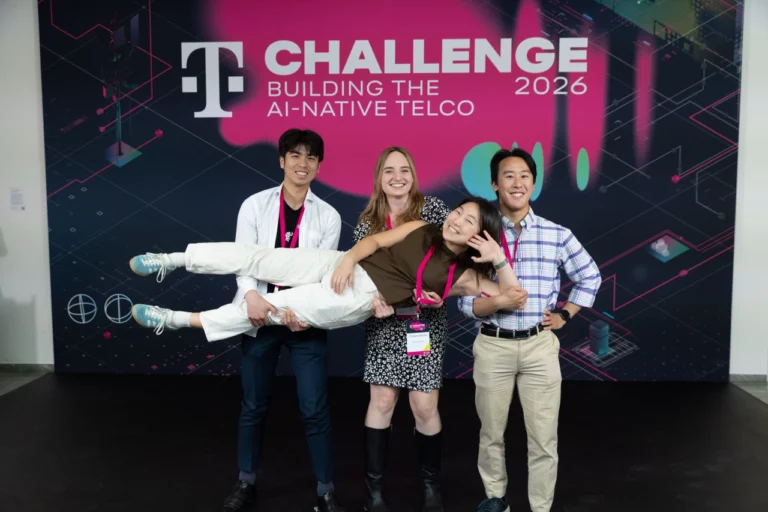
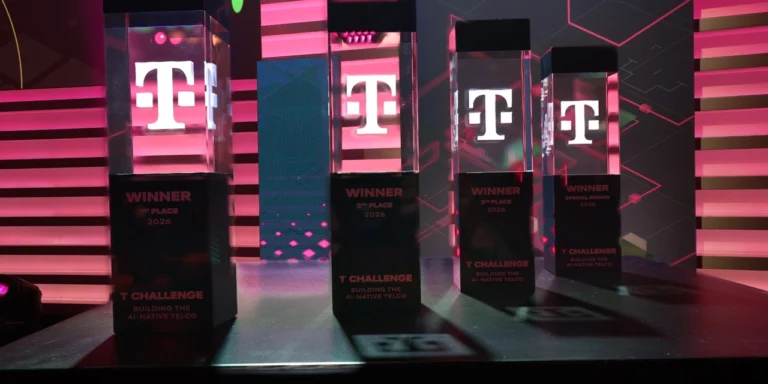
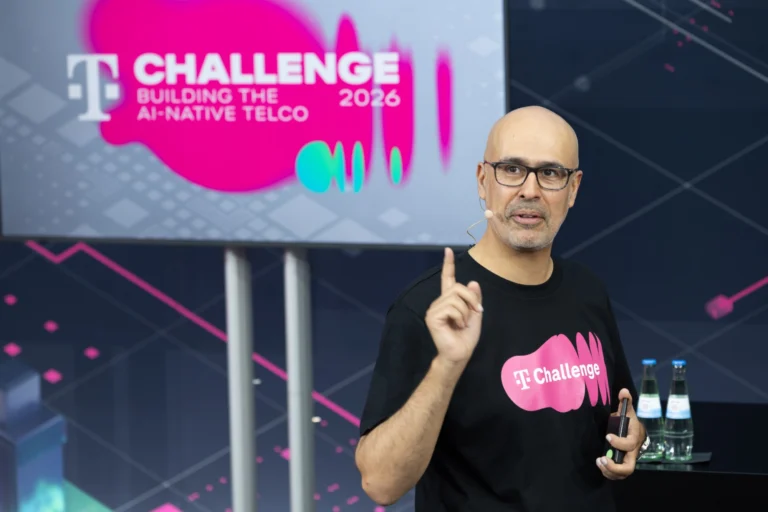
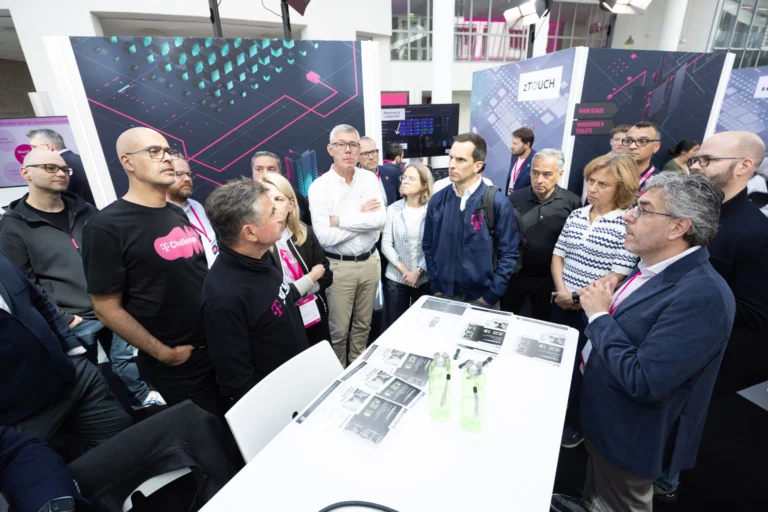
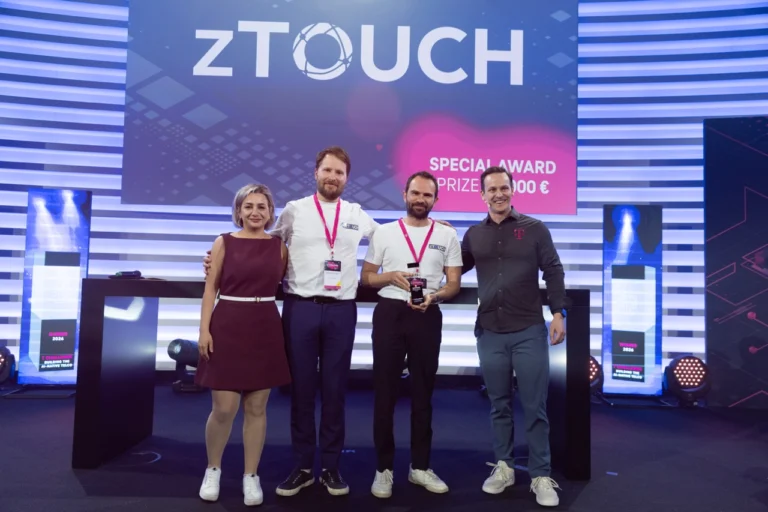
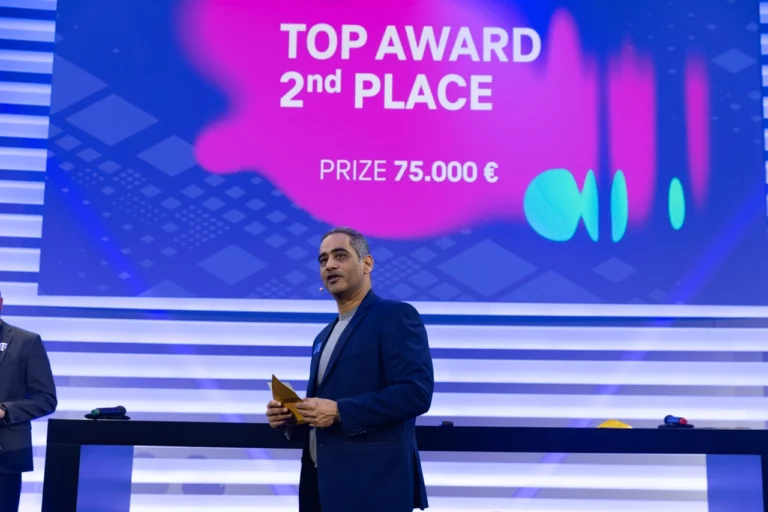
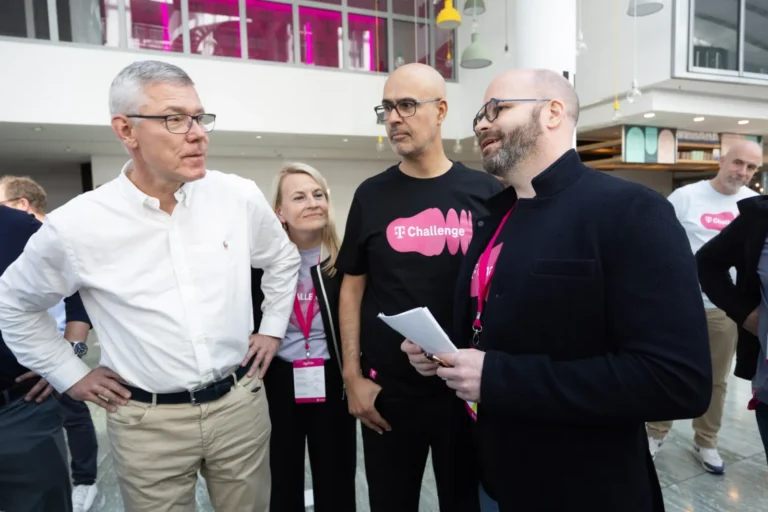
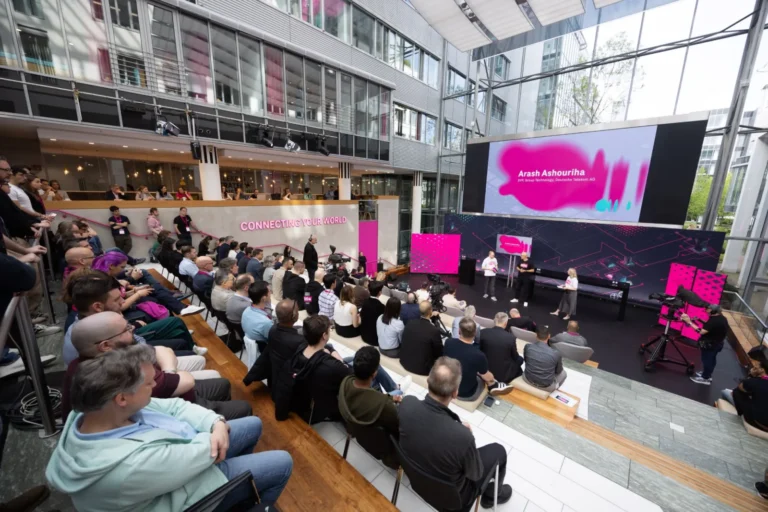
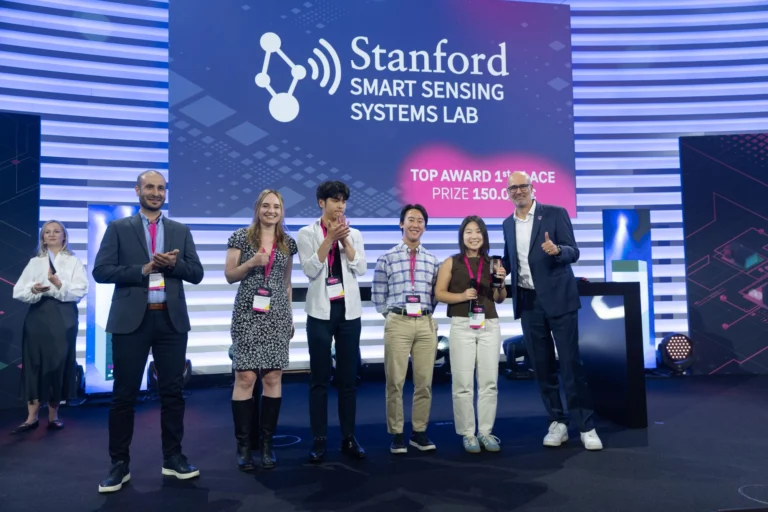
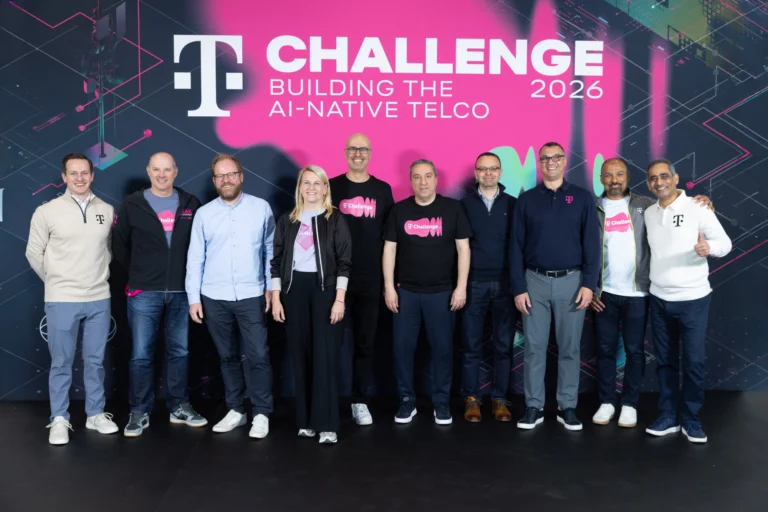
T Challenge 2026 Impressions



This year’s focus
SHAPING A WORLD OF CONNECTED INTELLIGENCE
How can we turn connected intelligence enabled by intent-driven, adaptive and autonomous networks into differentiated products and experiences that create real customer and business value?
This year, we are dedicated to advancing AI-native and next-generation telco solutions that make networks more intent-driven, adaptive and autonomous while enabling new products, experiences and value creation.
We seek visionary ideas and pioneering solutions that will shape the future of telecommunications by putting customers at the center and automating network operations. We invite all tech disruptors to share your bold visions and groundbreaking innovations.
Together, let’s shape the world of connected intelligence – building AI-native networks that understand intent, adapt dynamically to changing needs, and increasingly operate autonomously, creating the foundation for differentiated products, services and experiences that turn intelligence into tangible customer and business value.
Focus Areas
AI-Native & Resilient Networks
Future networks will need to do more than transport data reliably. AI can become an integral part of how networks understand intent, interact with their physical surroundings, support autonomous systems and continuously adapt to changing conditions. Combined with 6G, sensing and edge capabilities, this opens the door to networks that connect digital intelligence with the physical world.
We’re looking for innovations that explore this convergence and rethink what an AI-native network could enable — from intent-driven operation and intelligent infrastructure to autonomous field operations and new capabilities for Physical AI.
What We’re Looking For
Here are some priority areas, though we welcome bold, creative ideas beyond this list:
- Sense & Respond: How could networks use sensing of their physical environment to detect events, changes or risks and autonomously decide how to respond?
- Autonomous Field Operations: How could AI-powered robots, drones or other autonomous systems inspect, troubleshoot, maintain or repair network infrastructure with minimal human intervention?
- AI-Native Network Infrastructure: How could network infrastructure become more aware of its surroundings and autonomously adapt coverage, capacity, energy consumption or configuration based on what is happening in the physical world?
- Networks for Physical AI: How could networks autonomously provide the connectivity, compute and intelligence needed by robots, vehicles, drones and other Physical AI systems as they move and operate?
- Beyond Connectivity: What new autonomous-network use cases become possible when future networks can both communicate and sense people, objects, movement and their environment?
- AI & Intent: How could users or operators express what they want to achieve, while AI autonomously determines, executes and continuously adapts how the network delivers it?
- Convergence: What new use cases become possible when AI, 6G, sensing, intent and Physical AI come together to create networks that can understand goals, perceive their environment and autonomously act?
Why It Matters
AI-native networking has the potential to fundamentally expand the role of telecommunications infrastructure. Networks could evolve from systems that primarily provide connectivity into intelligent platforms that interpret intent, interact with their surroundings and enable autonomous machines and applications in the physical world.
Bringing together AI, 6G, sensing and Physical AI could unlock entirely new network capabilities, operational models and customer use cases. We’re interested in ideas that turn this convergence into practical, scalable solutions and demonstrate how intelligent networks can create value beyond connectivity.
Energy-Adaptable Networks
Can we build networks where energy consumption continuously follows actual demand?
Connectivity and computing demand continue to grow rapidly. AI, cloudification, edge computing and future 6G services will create unprecedented requirements for network and data-center capacity. Simply making individual components more efficient will not be enough.
For the next generation of networks, we need a fundamentally different capability: Energy Adaptability.
An energy-adaptable network dynamically adjusts the resources it activates—and therefore the energy it consumes—according to actual traffic, compute demand, service intent and operating conditions.
Our north star remains Zero Bit – Zero Watt: when there is no useful work, energy consumption should approach zero. But Energy Adaptability goes further. Across the entire load curve, from idle to peak demand, network and compute resources should activate only when, where and for as long as they are needed.
We are looking for startups, researchers and academic teams that can help make this vision a reality.
The Challenge
Today’s telecom networks and data centers are designed primarily for availability, performance and peak capacity. As a consequence, energy consumption often remains significant even when traffic or compute utilization is low.
The challenge is to make energy consumption increasingly proportional to useful work, while maintaining—or improving—customer experience, reliability and network performance.
This may require innovation across software, algorithms, network architecture, signaling, silicon, AI, cloud infrastructure, cooling and control systems.
AI can be a powerful enabler, but it is not a prerequisite. We also welcome fundamental architectural, hardware and protocol innovations that unlock new energy-adaptation capabilities.
We are particularly interested in solutions capable of operating across large, heterogeneous and brownfield telecom environments in Europe and the United States.
What We Are Looking For
Strong proposals should demonstrate one or more of the following capabilities:
- Make energy consumption follow demand: Dynamically activate, scale, consolidate, relocate or deactivate resources according to traffic, compute workload or service requirements.
- Reduce idle and low-load power: Enable deeper sleep states, selective shutdown, resource consolidation or new architectures that substantially reduce the energy floor of network and computing infrastructure.
- Optimize across network layers: Coordinate energy decisions across RAN, transport, core, edge, cloud and data-center infrastructure instead of optimizing individual components in isolation.
- Use intelligence to anticipate demand: Apply AI, machine learning or advanced control techniques to predict traffic and workload patterns and proactively configure resources.
- Design intelligence into the infrastructure: Explore AI-native silicon, event-driven computing, photonics, hardware acceleration and other architectures that fundamentally improve the relationship between performance and energy consumption.
- Mitigate increasing data-center power demand: Enable power-aware computing, AI workload optimization, dynamic resource placement, accelerator utilization, cooling optimization and orchestration across servers, racks, clusters and data centers.
- Maintain service quality: Energy adaptation must preserve defined customer-experience, latency, throughput, resilience and availability requirements.
- Work in real networks: Solutions should provide a credible integration path into heterogeneous, multi-vendor and brownfield environments using clearly defined interfaces and APIs.
- Scale: Solutions should have the potential to operate across thousands or millions of network components and across multiple markets.
- Demonstrate measurable impact: Proposals should quantify both energy benefits and their impact on performance, utilization and total cost of ownership.
Areas of Particular Interest
- 1. Energy-Proportional Network & Compute Orchestration: Solutions that dynamically determine what resources need to run, where they should run and when they can be switched off, across network, edge and cloud infrastructure. Examples include traffic-aware CNF/VNF placement, workload consolidation, power-aware routing and resource orchestration.
- 2. Adaptive Core Networks: Intelligent 5G/6G Core solutions that minimize the resources required to deliver a service. Examples include self-optimizing service meshes, dynamic traffic steering, control-plane optimization, scaling of network functions and selection of the most energy-efficient processing path.
- 3. AI-Native and Energy-Native RAN: Innovations combining hardware and intelligence to fundamentally reduce radio-network energy consumption. Areas could include AI-native silicon, spiking or event-driven neural networks, energy-aware L1 processing, hardware acceleration and photonics-electronics convergence.
- 4. Adaptive 6G Signaling: New approaches that reduce the energy associated with continuously active signaling and network broadcasts. We welcome concepts such as adaptive synchronization signals, on-demand signaling, multi-layer carrier architectures and mechanisms that allow significantly deeper network sleep without sacrificing coverage or accessibility.
- 5. Collaborative Edge Intelligence: Architectures that intelligently distribute training and inference between devices, edge infrastructure and central cloud. Solutions could use federated learning, distributed inference or workload placement to minimize unnecessary data transport and computing while meeting application requirements.
- 6. Energy-Adaptable Data Centers & Telco Cloud: Solutions addressing the rapidly increasing power requirements of cloud and AI infrastructure. We are looking for innovations in areas such as power-aware workload placement, server and accelerator power management, dynamic capacity activation, liquid or intelligent cooling, cluster consolidation, AI workload scheduling and coordination between network demand and data-center resources. The objective is not simply a more efficient server—but a data center whose total power demand adapts dynamically to the useful computing work being performed.
- 7. Energy-Aware AI: Solutions that make AI itself more energy adaptable, including dynamic model selection, precision adaptation, inference placement, accelerator utilization, model compression and mechanisms that select the minimum computing resources necessary to satisfy a given intent.
- 8. Grid-Interactive Networks and Data Centers: Approaches that allow telecom infrastructure to adapt electricity demand in response to grid conditions, renewable-energy availability or energy prices—without compromising telecommunications services. This could include intelligent workload shifting, flexible cooling or compute demand, distributed energy resources and other mechanisms that turn networks and data centers into more flexible electricity consumers.
What Success Looks Like
We are looking beyond a one-time percentage reduction in energy consumption.
A compelling solution should demonstrate that the network or infrastructure becomes more adaptable:
- Less demand → fewer active resources → lower power consumption.
- More demand → resources activate where they create the greatest value.
- Demand changes → the infrastructure responds autonomously, quickly and safely.
The strongest solutions will combine significant energy impact, customer-safe operation, technical innovation, scalability and a credible path toward deployment within Deutsche Telekom and T-Mobile networks.
Help us shape an era of connected intelligence in which networks are not only intelligent—but intelligent about every watt they consume.
Next-Generation Products, Experiences & New Value Creation
Autonomous Networks Level 5 — Trusted Decisions, Self-Evolving Networks
Imagine a network that runs itself end to end, and that you can trust to do so. Level-5 autonomy is not more automation. It is a network whose AI takes high-quality decisions without a human in the loop, knows the limits of its own judgement, can explain and prove why it acted, and keeps evolving while staying within a safe, verified envelope.
We’re looking for bold technical innovations that make this level of autonomy achievable: world models and network digital twins that let the network test an action before taking it, methods that make critical behavior structurally impossible, explainability and provenance that turn trust into an engineering property, and ways to judge the quality of what a self-evolving network creates on its own.
What We’re Looking For
Here are some priority areas, though we welcome bold, creative ideas beyond this list:
- High-Quality Decisions: How could an autonomous network take consistently high-quality decisions at scale, using world models, network digital twins or learned simulators to evaluate an action before executing it in the live network?
- Safe by Design: How could critical or irreversible behavior be prevented structurally rather than detected afterwards, for example through safety envelopes, verified action spaces, shielding of learning agents, blast-radius containment and guaranteed rollback?
- Knowing When Not to Decide: How could the network quantify its own uncertainty, recognize situations it has never seen, and escalate to a human as a calibrated decision rather than a fallback?
- Explainable and Provable Decisions: How could every autonomous decision be traced to its cause, explained in operational terms and audited afterwards, so that trust becomes measurable rather than assumed? What role could telco foundation models play in making decisions transparent?
- Robust Against Manipulation: How could autonomous decisions stay sound when the telemetry, models or agents they rely on are corrupted or attacked, for example through poisoned data, adversarial inputs or compromised agents holding write access to the network?
- Self-Evolving Networks: How could a network go beyond executing decisions and evolve itself, deriving new configurations, capabilities or service definitions on its own, while remaining reversible and inside a verified envelope?
- Judging Auto-Innovation: When a self-evolving network autonomously produces an artefact, such as a technical specification, a product description or a new service design, how could the quality of that output be assessed? What methodology tells us whether an auto-innovation loop is good enough to act on?
Why It Matters
Level-5 autonomy is the point where the network no longer needs a human to approve its decisions. That only works if those decisions are demonstrably good and demonstrably safe. Technical trust, not organizational sign-off, is what unlocks the next era of connected intelligence. We’re looking for scalable, verifiable ideas that can be tested in real networks and applied widely.
Quantum Technologies: From Quantum Resources to Network Services
Imagine a network where quantum resources can be accessed as easily as connectivity or cloud compute today. Entanglement, quantum-state transmission and other quantum capabilities could become dynamically available across users and locations — turning emerging quantum infrastructure into services that can be discovered, orchestrated and consumed on demand.
We’re looking for bold technical innovations that bring quantum technologies into real-world network environments: from architectures for distributing and orchestrating quantum resources to novel applications, integration with classical telecom and cloud infrastructure, and service models that can turn quantum capabilities into tangible customer value.
What We’re Looking For
Here are some priority areas, though we welcome bold, creative ideas beyond this list:
- How can quantum resources become a network service? How could the transmission of quantum states or the distribution of entanglement be offered on demand, between different users and locations, much like connectivity and cloud resources are provided today?
- What are the killer applications for networked quantum resources? Beyond established concepts such as QKD, which novel applications could create tangible value from remotely shared entanglement or the ability to transmit qubits? Which customer segments and use cases would pay for quantum-network services beyond QKD, and what problem would quantum solve better than classical alternatives?
- How should a quantum network be controlled and orchestrated? What new architectures, protocols and control mechanisms are needed to discover, allocate, route and assure quantum resources dynamically across heterogeneous network infrastructures? What interim architectures can integrate quantum capabilities with existing fiber, optical transport, cloud and security infrastructure before mature end-to-end quantum networks exist?
- How can quantum and classical networks work together? How can quantum communication capabilities be integrated with existing telecom and cloud infrastructure, including classical optical networks, compute resources and applications, while remaining scalable and operationally viable? What operational capabilities would be required to assure, monitor and troubleshoot quantum services in a carrier environment with classical network operations?
- How can quantum-network services become commercially viable? What service models, performance metrics, SLAs and business models could turn scarce and technically demanding quantum resources into differentiated services that customers are willing to use and pay for? How should operators prioritize quantum investments relative to nearer-term AI-native network, edge, security and resilience capabilities?
Why It Matters
Quantum networking could extend telecommunications beyond the transmission of classical information and introduce entirely new network resources and capabilities. The opportunity is not only to build quantum links, but to make quantum resources accessible, orchestratable and useful as part of future network and cloud infrastructures.
We’re looking for scalable ideas that bridge the gap between quantum technology and real-world telecom networks — and help identify where networked quantum resources can create value that classical networks cannot.
Differentiated Services: The Next Evolution of Network Slicing and Intent-Based Networking
Imagine a network where differentiation isn’t a static, pre-configured slice policy, but a continuously negotiated outcome between what a service asks for and what the network can autonomously deliver. Today’s differentiated connectivity, built on 5G SA slicing, relies on largely static policies that become difficult to scale as more concurrent services compete for the same resources and policies begin to conflict. Intent-based networking offers a path beyond this: instead of pre-defining rigid slice configurations, services express what they need, and the network autonomously interprets, allocates and continuously assures it. This shift also opens a path toward more verifiable, enforceable SLAs, and, extended into the RAN, toward radio infrastructure that understands the services it’s carrying, not just the traffic it’s moving.
What We’re Looking For
Here are some priority areas, though we welcome bold, creative ideas beyond this list:
- Intent-Based Differentiation: How could networks move beyond static slice policies toward intent-based frameworks that autonomously interpret service requirements and resolve conflicts between concurrent regular, premium and AI-driven services in real time?
- SLA-Grade Differentiated Services: How could intent-based connectivity be turned into commercially viable, verifiable SLAs, enabling operators to sell guaranteed performance for premium or mission-critical use cases rather than best-effort differentiation?
- Self-Aware RAN: How could the RAN become aware of the underlying services it’s carrying, detecting and differentiating service types with less dependence on OS- or device-level signaling, to make smarter, service-informed resource-allocation decisions?
- Intent Assurance at Scale: How could a network continuously monitor whether it’s meeting a service’s intent, and autonomously act to keep performance within target limits, across many concurrent and possibly conflicting intents?
- AI-Enabled Resource Allocation: How could AI be used to holistically allocate radio resources across concurrent services, and to translate raw network telemetry into the higher-level performance indicators an intent framework needs?
Why It Matters
Static slicing got operators to differentiated connectivity, but it doesn’t scale as demand and use cases multiply. Intent-based networking, extended all the way into the RAN, offers a foundation for services to express what they need and have the network autonomously deliver and assure it, opening the door to SLA-backed premium services and to a RAN that understands, not just carries, the services running over it. We’re looking for scalable, deployable ideas that can turn this shift from a slicing evolution into a genuine new source of differentiated, monetizable network value.
6G Areas of Interest
Intent-Based Networks
Imagine telling the network what you need, rather than specifying how it should be configured. Instead of selecting from predefined products or manually configuring network parameters, users, businesses, applications, and AI agents express the outcome they need. The network then translates that intent into the required services and behavior.
Intent-based networks create the opportunity to make network services more dynamic and personalized. An intent could come from a person, an application, a machine, or an AI agent, with the network interpreting the request, configuring the necessary resources, and continuously adapting as needs change.
What We’re Looking For
Here are some priority areas, though we welcome bold, creative ideas beyond this list:
- Intent capture: How might a device understand what someone wants, spoken, gestured, or sent by an AI agent, and hand it straight to the network?
- Intent translation: How could a stated wish become a running service, with no engineer anywhere in the loop?
- Networks on demand: How might a trusted, personal network environment appear for exactly as long as it is needed, then disappear?
- New services & monetization: How could intent-based networks enable entirely new services and business models, turning user or machine intent directly into value?
- Machines with intent: How could a network serve millions of robots and AI agents asking for things at machine speed?
- Intent from others: How could a streaming service, a game studio, or a factory platform buy the network behavior it needs, safely and at arm’s length?
- Personal without preferential: How can one customer receive a service shaped entirely around them, while the network stays inside net neutrality rules?
- When intent goes wrong: How can a single misunderstood intent be prevented from reconfiguring the entire network, and quickly reversed before it causes disruption?
- Into the real world: How can these solutions work reliably in real, multi-vendor networks that were not designed to support them?
- Context-awareness: How can these solutions become context-aware to make decisions based on the status of the customer and/or terminal to optimize customer experience and resource efficiency?
- Context/intent memory: How to implement a context/intent memory in a regulation-compliant, secure and transparent way such that the customer is always in full control of their data?
- Service Awareness: How can we improve customer experience by implicitly deriving optimization measures based on the awareness of the services that are being used?
Why It Matters
A network that responds to intent no longer sells the same product to everyone. Instead, it delivers personalized experiences for individuals, provides businesses with measurable outcomes, and produces only what is specifically requested. We are seeking ideas that can be tested, validated, and widely applied.
Sensing
Imagine a mobile network that doesn’t just connect the world — it can sense, understand and respond to it. Integrated sensing could turn networks into a source of real-time intelligence, creating new possibilities for Physical AI, automation and smarter services.
We’re looking for bold solutions that make network sensing scalable, trustworthy, privacy-preserving and actionable.
What We’re Looking For
Here are some priority areas, though we welcome bold, creative ideas beyond this list:
- Sense, Understand & Act: How could mobile networks use integrated sensing to understand what is happening in the physical environment and autonomously respond to events, changes or risks?
- Sensing as a Network Service: How could operators turn network sensing into a scalable service, exposing useful insights about objects, movement and the environment to applications through standardized and easy-to-use APIs? How to enable intelligence on top of the sensing data to provide customers with answers to their questions, not just data about objects. How to know in “real-time” if we can meet the sensing request requirements from the customer. The Ray tracing approach is quite complex and compute intensive, on the other hand abstraction can be too far from the reality.
- ISAC for Physical AI: How could network-based sensing, connectivity and edge intelligence provide robots, drones, vehicles and other Physical AI systems with reliable situational awareness beyond what their onboard sensors can provide?
- Privacy-Preserving Sensing: How could network sensing deliver valuable information while minimizing collection and exposure of information about people and ensuring privacy, security, transparency and appropriate control over sensing data? The privacy is a high priority for us.
- Autonomous Communication–Sensing Orchestration: How could AI dynamically balance communication and sensing resources—including spectrum, beams, power and compute—to deliver sensing capabilities without compromising communication services or energy efficiency?
- Cooperative and Multi-Source Sensing: How could sensing information from multiple base stations, devices, vendors or sensing technologies be combined to create more reliable and accurate awareness of the physical environment? How to manage the presence or lack of trust in the data to provide trustworthy service?
Why It Matters
Network sensing could transform mobile networks from communication platforms into intelligent systems that understand the physical world. By combining sensing, connectivity and AI, networks can enable safer automation, smarter services and new capabilities for Physical AI. We’re looking for scalable, trustworthy and privacy-preserving ideas that can turn sensing into real-world value.
Network & Compute for Physical AI
Physical AI brings intelligence into the physical world. Robots, drones, vehicles, and other intelligent machines continuously reason based on what they sense in their environment, they act based on it adapt and learn. These functions have very different requirements and do not need to happen in the same place—some run directly on the device, while others can benefit from compute and intelligence distributed across the network edge and cloud.
6G creates the opportunity to build a network and compute continuum for Physical AI, connecting devices, radio sites, edge, and cloud. By combining communication, sensing, and distributed compute, the network can provide AI workloads with the resources, performance, and reliability they need—where and when they need them.
What We’re Looking For
Here are some priority areas, though we welcome bold, creative ideas beyond this list:
- Predictable performance: How can network and compute infrastructure provide the latency, reliability, and resilience that Physical AI applications need in real-world environments?
- Intelligence on the move: How can AI workloads seamlessly follow moving robots, vehicles, or drones across cells and sites?
- AI at the network edge: How can demanding AI workloads run within the power, space, and cost constraints of distributed network infrastructure?
- Communication-compute coordination: How can communication and computing resources be jointly coordinated to dynamically place and execute Physical AI workloads across device, edge, and cloud?
- Coordinating machines at scale: How can network and compute infrastructure enable large fleets of robots and autonomous machines to operate and coordinate efficiently?
- Sovereign AI infrastructure: How can Physical AI workloads run across distributed network and compute infrastructure while meeting European requirements for data and operational sovereignty?
Why It Matters
We want solutions that demonstrate how network and compute infrastructure can extend the capabilities of Physical AI beyond the device. The goal is to combine connectivity, sensing, and distributed compute in ways that enable Physical AI workloads to run reliably, efficiently, and at scale across real network infrastructure.
Beyond 6G
AI-Native and Autonomous Networks
Today’s networks are complex systems that require continuous configuration, optimization, and troubleshooting across many domains and vendors. As this complexity grows, manually operating every part of the network will no longer scale.
AI-native 6G creates the opportunity for a network that can understand its own state, anticipate what is needed, and increasingly manage itself. AI could optimize coverage and capacity, reduce energy consumption, assure services, identify the root cause of problems, and coordinate actions across RAN, core, and other network domains—with humans remaining in control of objectives and critical decisions.
Key Questions We Want to Explore
- AI-native network functions: How can AI be natively integrated into network functions across RAN, core, and other domains to continuously improve performance, coverage, capacity, and energy efficiency?
- From detection to resolution: How can AI identify anomalies, determine their root cause, and take corrective action before they affect services?
- Autonomy across the network: How can AI coordinate decisions across RAN, core, transport, and cloud rather than optimizing individual domains in isolation?
- AI agents for network operations: How can autonomous agents plan and execute complex network tasks while interacting safely with existing systems and other agents?
- Trust and control: How can autonomous network decisions remain explainable, auditable, and under operator control?
- Network for AI: How can networks provide the connectivity, performance, and data capabilities needed to efficiently support distributed AI workloads?
- Learning from the network: How can network data and digital twins be used to train, test, and continuously improve AI-driven network operations?
- Autonomy in a multi-vendor world: How can AI-driven automation work reliably across equipment, software, and interfaces from different vendors?
Why It Matters
We want solutions that move network automation beyond predefined rules and isolated AI use cases toward networks that can increasingly understand, optimize, and operate themselves. The goal is to make autonomous network operations reliable, controllable, and applicable across real, multi-vendor network environments.
Network-Aware Personal AI Agents
Network-aware personal AI agents are important because they transform AI into an intelligent service that can anticipate needs, make decisions and take action based on real-time network condition.
What We’re Looking For
Here are some priority areas, although we welcome bold, creative ideas beyond this list:
- Personal AI Agents: How can personal agents that use secure, consented network signals to anticipate problems, optimize connectivity and act on a customer’s behalf, without exposing raw personal data?
- Personalized Experiences: How can AI agents combine user preference and real-time network conditions to provide relevant assistance to increase the customer experience?
Why It Matters
This transforms everyday AI experiences into intelligent, personalized experiences powered by network connectivity
Any questions? Check our FAQ for answers.
Prize Pool
UP TO €450,000
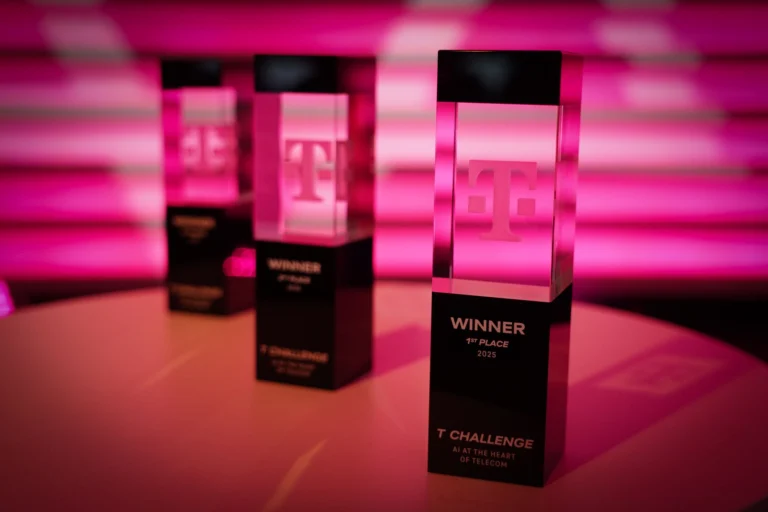
The T Challenge features a prize pool of up to €450,000, designed to reward visionary ideas, groundbreaking research, and impactful solutions. In addition to the three top awards and a special award, all nominees are invited to present their solutions at Deutsche Telekom’s headquarters in Bonn. This is a remarkable opportunity to engage with top decision-makers from both Deutsche Telekom and T-Mobile US about business opportunities and showcase your ideas to a wide audience.
TOP AWARDS
1st Winner
€150,000
2ND Winner
€75,000
3rd Winner
€50,000
+
Special AWARD
€25,000
All nominees in the development phase (up to 12 teams) are eligible to receive a special award in addition to their top award nomination
+
Experience Package
Worth up to
€150,000
All selected nominees are invited to visit the Telekom headquarters, network with top executives, and attend the exclusive gala dinner & awards ceremony
Highlights of the experience package
Invitation for all nominees
All nominees are invited to the T Challenge Finals at the Telekom Headquarters in Bonn, Germany.
Travel and accommodation arrangements will be booked and funded by us.
Mentoring & Networking
Personal mentoring by experts from within the Telekom Group and T-Mobile US.
Unique networking and knowledge exchange opportunities.
Gala Dinner & Evening Ceremony
Exclusive Gala Dinner with high-profile decision-makers and inspirational keynote speakers providing industry insights.
Recognition & Award
Opportunity to showcase your solution to a professional audience and top executives.
What’s in it for me? Information on benefits and prize money.
Target Group
Who are we looking for?
We call on ambitious startups, developers, and researchers worldwide to showcase revolutionary approaches to shaping a world of connected intelligence – from AI-native and resilient networks to energy-adaptable architectures and next-generation products, experiences and new value creation in 6G that will transform the future of telecommunications.

Researchers

Developers

Startups
Timeline
January 9, 2027
February 16, 2027
May 10, 2027
News